
AI voice generators in 2025 are transforming how creators produce professional audio for YouTube, podcasts, courses, and ads. These tools save time and cut costs by replacing traditional voiceover processes, delivering human-like voices with advanced customization. Here’s a quick look at the top options:
- ElevenLabs: Excels in voice cloning and lifelike audio for multilingual projects. Ideal for podcasts and audiobooks.
- PlayHT: Offers 907+ voices and 142 languages with strong customization features. Great for international creators.
- Speechify: Simple and budget-friendly, perfect for quick tasks and accessibility-focused content.
- Murf AI: Balances quality and usability, supporting 20+ languages and voice cloning. Works well for training and marketing.
- Typecast: Adds emotional depth to voiceovers with advanced tone and emotion controls. Best for storytelling and character-driven content.
Quick Comparison:
| Tool | Voice Quality | Customization Options | Language Support | Pricing |
|---|---|---|---|---|
| ElevenLabs | Highly realistic | Advanced voice cloning | Multiple | Premium |
| PlayHT | High quality | Extensive adjustments | Broad | Moderate |
| Speechify | Basic but effective | Limited | Sufficient | Budget-friendly |
| Murf AI | Balanced performance | Comprehensive tools | Adequate | Mid-range |
| Typecast | Natural with emotion | Emotion and tone controls | Multiple | Flexible |
Choose based on your needs – whether it’s realism, language diversity, affordability, or emotional expressiveness. Free trials help you find the perfect fit.
Best AI Voice Generators (2025 Review) – Free, Realistic & Easy to Use
1. ElevenLabs

ElevenLabs specializes in creating lifelike audio for presentations, audiobooks, and podcasts through advanced voice cloning technology. With just an audio sample, it can generate a digital replica of a voice, making it a powerful tool for content creators.
Voice Quality
Using neural synthesis, ElevenLabs produces audio that sounds smooth and natural, even for lengthy projects like podcasts or online courses. The result is consistent and engaging audio that feels authentic to listeners.
Customization Options
ElevenLabs supports SSML (Speech Synthesis Markup Language), allowing users to adjust elements like pauses, emphasis, and pronunciation. This means you can tailor the voice output to perfectly match the tone and style of your content.
Language Support
The platform offers multilingual capabilities while maintaining the same voice characteristics across different languages. This makes it easier for creators to connect with global audiences without losing the unique qualities of the original voice.
Pricing
ElevenLabs uses a subscription model with various plans designed to meet different levels of usage. Trial options are also available for those looking to explore the service before committing. Detailed pricing information can be found on their website.
ElevenLabs sets a benchmark in voice cloning technology, making it a strong contender among top audio solutions.
2. PlayHT
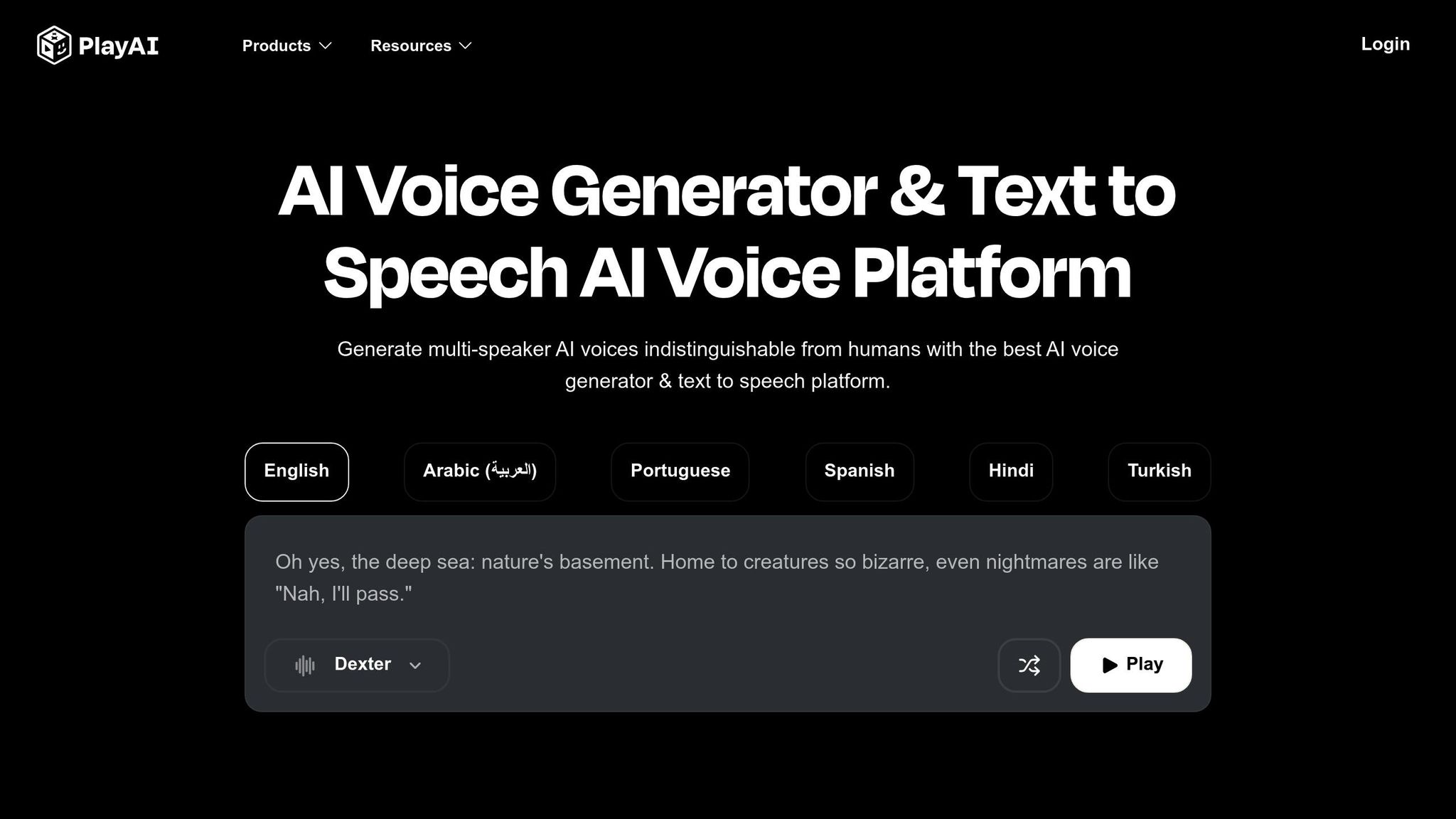
PlayHT stands out as a versatile tool for professional voiceovers, offering a broad voice library and advanced customization options. It’s a go-to platform for content creators looking to produce high-quality audio that meets professional standards.
Voice Quality
PlayHT brings audio to life with its collection of over 907 AI voices, covering a diverse range of demographics and speaking styles. Whether you’re working on an educational video or narrating an audiobook, the platform ensures consistent, natural-sounding voices that keep listeners engaged. It’s no wonder tools like PlayHT are making waves in content creation as we move through 2025.
Customization Options
Flexibility is key with PlayHT. You can tweak speech rate, pitch, and emphasis, or add pauses to match your project’s tone. It also allows saving custom pronunciations and adding expressive emotions to the voices. Need something more advanced? Features like voice cloning and cross-language cloning help maintain native accents across languages. These settings, combined with its wide language support, make the platform incredibly adaptable.
Language Support
With support for 142 languages and accents, PlayHT is a powerful tool for reaching global audiences. Whether you’re creating content for an international market or producing multilingual projects, this platform has you covered.
Pricing
PlayHT operates on a subscription model, offering tiered plans that vary based on monthly character limits and access to premium voice features. This flexible pricing structure ensures there’s an option for every need.
3. Speechify
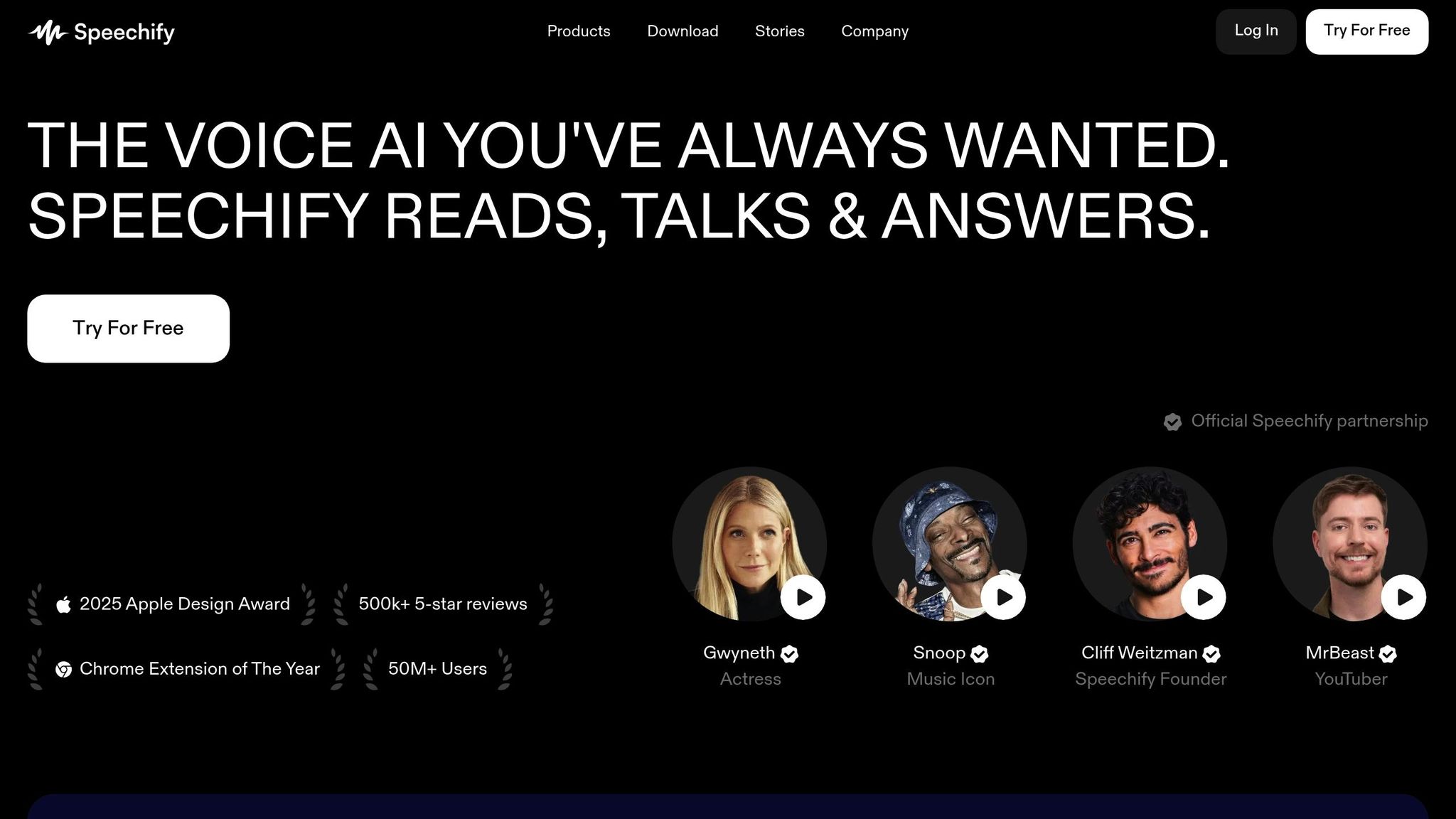
Speechify focuses on making audio content creation simple and accessible. Originally designed to assist those with reading challenges, it has evolved into a go-to tool for creators needing high-quality, natural-sounding audio. Here’s a closer look at what it offers.
Voice Quality
Speechify provides lifelike voices that are perfect for educational materials and audiobook narration. The conversational tone of its voices keeps listeners engaged, making it a great choice for instructional videos, online courses, and other content aimed at improving accessibility.
Customization Options
The platform keeps customization straightforward. You can tweak the reading speed and set personalized pronunciations, allowing you to create polished audio in no time.
Language Support
While Speechify supports multiple languages, its strength lies in English. It handles American, British, and Australian accents with ease, ensuring a smooth listening experience for a wide range of audiences.
Pricing
Speechify uses a freemium pricing structure. The free version offers basic text-to-speech features with some usage limits. Upgrading to the premium tier unlocks additional voices, faster processing speeds, and commercial usage rights. This pricing model makes it a practical option for individual creators and small teams.
sbb-itb-8421839
4. Murf AI
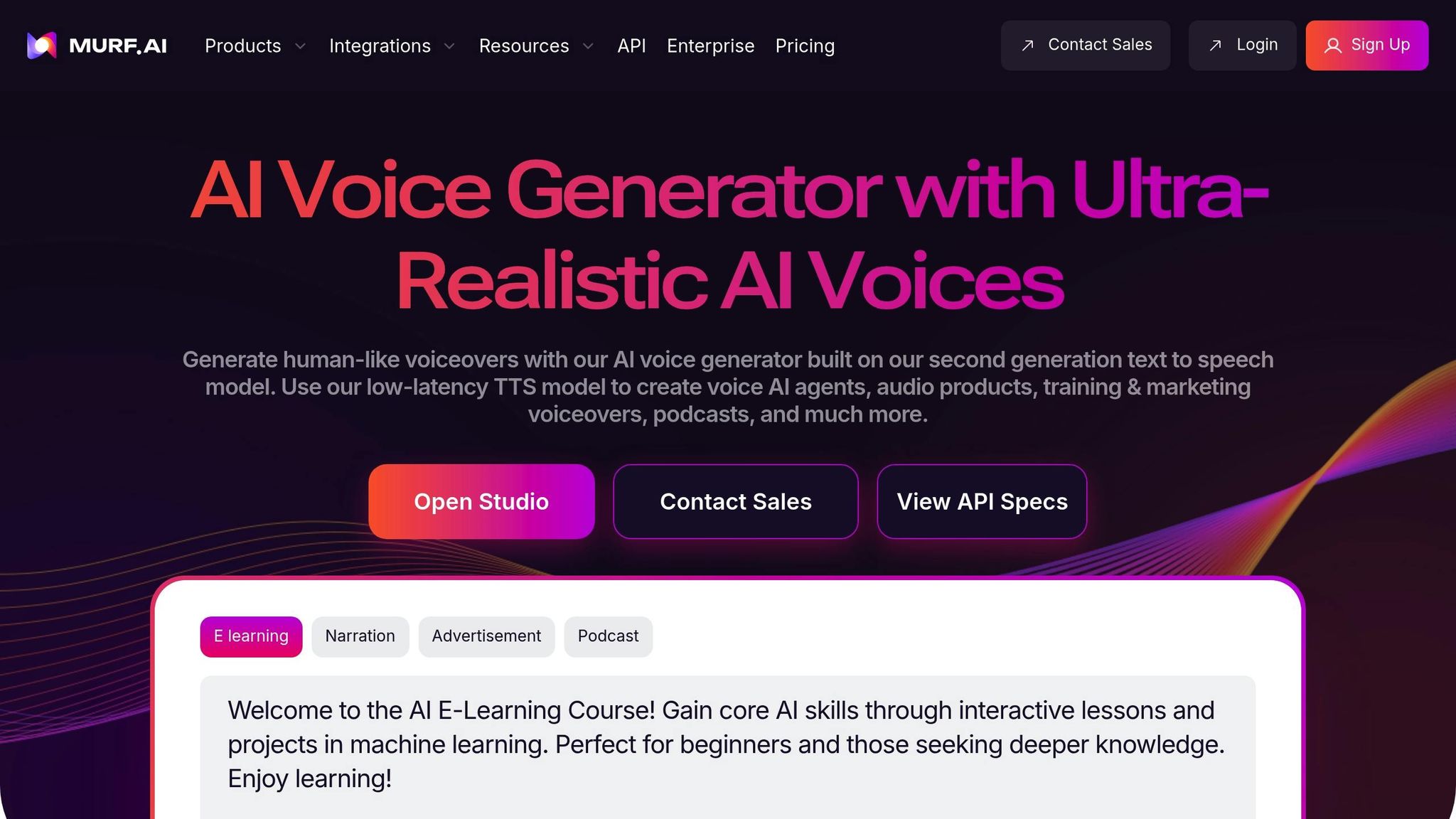
Murf AI stands out as a versatile platform for generating high-quality voiceovers in record time, making it a go-to choice for content creators seeking professional results.
Voice Quality
Murf AI produces lifelike voices that closely mimic professional voice actors. Its advanced neural networks ensure the voices sound natural and consistent, even when tackling tricky pronunciations or varying content styles. Whether you’re working on a quick 30-second ad or a lengthy 2-hour training session, Murf AI delivers voices that suit a range of projects perfectly. This makes it especially useful for corporate training and educational content.
Customization Options
The platform offers a range of customization tools, allowing you to tweak pitch, speed, emphasis, and pauses to fit your specific needs. A pronunciation editor adds another layer of control, ensuring accuracy in how words are spoken. One standout feature is voice cloning, which lets you replicate your own speech patterns. This is a game-changer for maintaining a consistent brand voice while scaling up content production.
Language Support
Murf AI supports over 20 languages and includes accents like American, British, Australian, and Canadian. It’s designed to handle multilingual projects with ease, letting you switch between languages within the same project. This makes it an excellent choice for creators producing content for global audiences.
Pricing
Murf AI offers subscription plans to suit different needs. The basic plan starts at $23/month, giving you 24 hours of voice generation with commercial rights. For $52/month, you get 48 hours of generation plus access to advanced features. There’s also an Enterprise plan that includes unlimited voice generation and custom voice creation. These options provide flexibility for creators with varying production demands.
5. Typecast
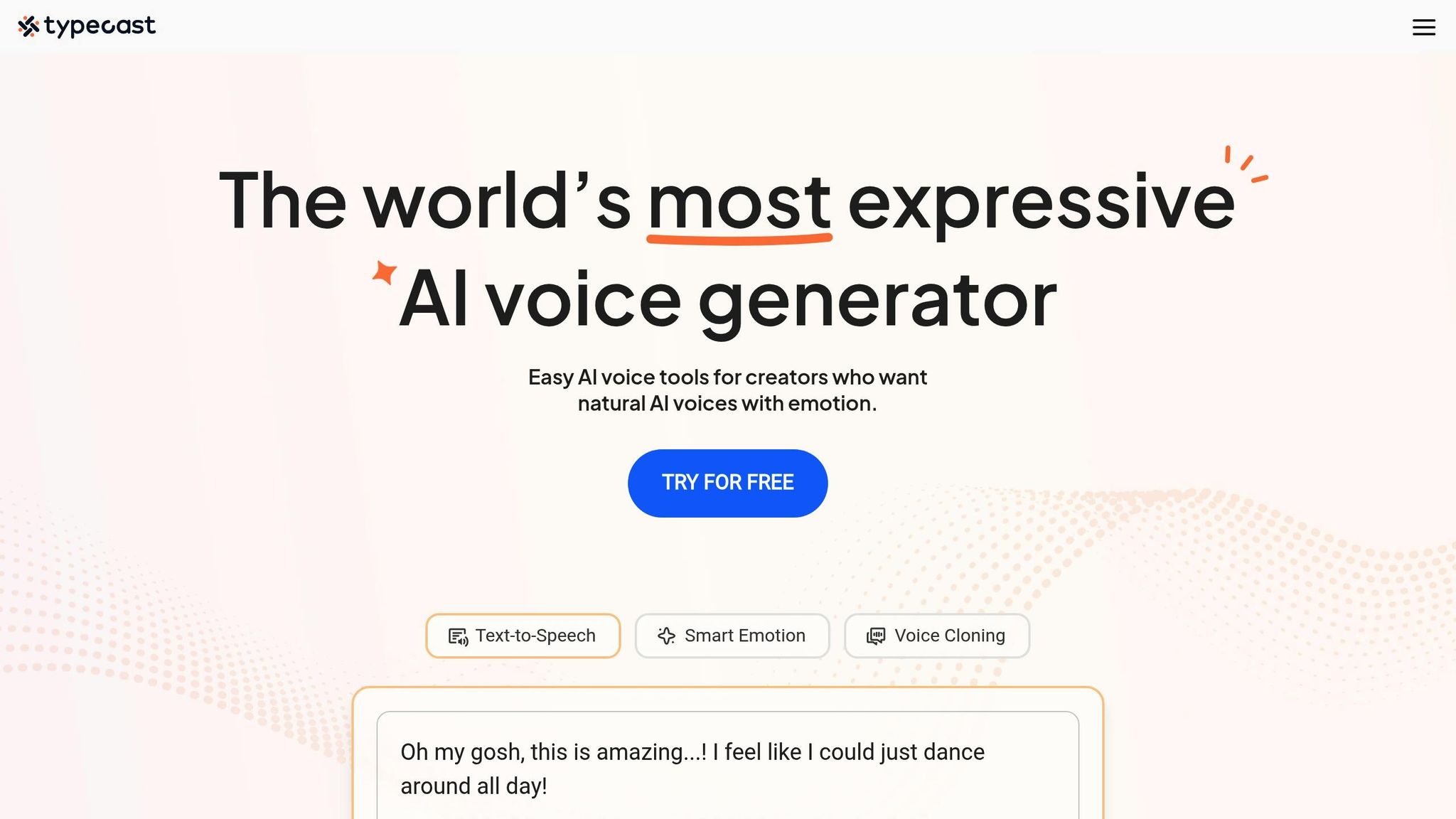
Typecast brings an impressive level of emotional nuance to voiceovers, standing out among AI tools developed in recent years. It’s a go-to choice for creators aiming to make their voiceovers sound natural and engaging.
Voice Quality
At the heart of Typecast is its Speech Synthesis Foundation Model (SSFM), which delivers a conversational rhythm and flow that feels incredibly lifelike. Unlike many AI voice tools that sound stiff or mechanical, Typecast produces voices with genuine expressiveness. Whether you’re working on a dramatic project, educational content, or a casual vlog, this tool adapts to suit the tone and style you need.
Customization Options
Typecast shines when it comes to customization. It lets you tweak tone, pace, pitch, emphasis, and pronunciation to fine-tune your voiceover. Its standout "Smart Emotion" feature is a game-changer, automatically adjusting the emotion, tone, and speed of a voice based on your script’s context – all with a single click.
The "Dynamics" feature adds another layer of control, allowing you to refine pronunciation, pitch, and intonation. You can even insert pauses at just the right moments to enhance pacing. Plus, you can create custom voices tailored to your script using prompts or audio samples, ensuring your voiceovers align perfectly with your content’s mood.
"I’ve been using Typecast for my YouTube channel, and I’m a fan of their text-to-speech capabilities. The emotional control I get over the voices is what sets them apart – being able to adjust pitch, speed, and delivery creates much more engaging content than typical robotic TTS tools." – Moe Lueker, AI Content Creator
This level of flexibility makes it a powerful tool for creators who want complete control over their audio.
Pricing
Typecast’s pricing plans cater to a variety of creators.
- The Free Plan includes 5 minutes of download credits per month but requires attribution for any downloaded content.
- The Basic Plan eliminates the attribution requirement, offers a commercial license, and provides 60 minutes of download credits monthly. It also includes high-quality audio downloads and Full HD video capabilities.
- The Pro Plan steps things up with 2 hours of download credits, advanced emotion control features, and one voice cloning slot.
- The Business Plan is designed for larger-scale needs, offering 6 hours of download credits, two voice cloning slots, and expanded storage options.
All plans allow unlimited voice generation for testing before downloading, giving creators the freedom to experiment and refine their audio. This tiered approach ensures there’s an option for every creator, from hobbyists to professionals.
Advantages and Disadvantages
Let’s break down the strengths and limitations of each tool to help you decide which one fits your needs and budget best.
ElevenLabs is known for its ability to produce incredibly lifelike voices that closely resemble human speech. Its standout feature is voice cloning, which allows creators to replicate specific voices with impressive accuracy. However, the advanced features come with a steeper learning curve and a higher price tag.
PlayHT shines with its large voice library and extensive language support, making it a great choice for creators working with international audiences. While it offers solid customization options, some users might find the interface less intuitive.
Speechify prioritizes simplicity and ease of use. It’s perfect for quick text-to-speech tasks without requiring much customization. That said, its limited customization features and voice quality may not meet the needs of users looking for a highly professional sound.
Murf AI strikes a middle ground, offering a well-rounded set of features paired with an easy-to-navigate interface. It performs consistently across different types of content, though occasional tonal inconsistencies might be a drawback for some.
Typecast stands out with its ability to deliver natural and expressive speech, thanks to its Smart Emotion feature. This makes it ideal for creators who need voiceovers with emotional depth and nuance. However, its complex interface and pricing structure might make it less appealing to casual users.
To make things clearer, here’s a comparison of their core features:
| Tool | Voice Quality | Customization Options | Language Support | Pricing |
|---|---|---|---|---|
| ElevenLabs | Highly realistic | Advanced voice cloning | Multiple languages | Premium |
| PlayHT | High quality | Extensive customization | Broad language support | Moderate |
| Speechify | Basic but effective | Limited options | Sufficient support | Budget-friendly |
| Murf AI | Balanced performance | Comprehensive features | Adequate support | Mid-range |
| Typecast | Natural with emotion | Smart emotion control | Multiple languages | Flexible |
When choosing a tool, think about what matters most to you. If realism tops your list, ElevenLabs is your go-to. Need broad language support? PlayHT has you covered. Budget-conscious or just starting out? Speechify keeps things simple and affordable. For a balanced mix of quality and usability, Murf AI is a solid pick. And if you’re after expressive, emotionally rich voiceovers, Typecast is hard to beat.
Final Thoughts
Each of these tools brings a unique set of features designed to meet specific content creation needs. Choosing the right one depends on your goals and priorities.
For podcasters, audiobook narrators, or YouTube creators aiming for high-quality voiceovers, ElevenLabs stands out with its advanced voice cloning capabilities.
If you’re targeting a multilingual audience, PlayHT is a solid choice. Its extensive language support helps maintain consistent branding across various markets.
On a tight budget? Speechify is a practical pick for quick, affordable voiceovers. It’s great for social media content, entry-level projects, or simple explainer videos.
For those who need a balance of functionality and user-friendliness, Murf AI is a reliable option. It works well for creating educational content, corporate training videos, and marketing materials that require consistent quality.
Lastly, Typecast shines with its Smart Emotion feature, making it a go-to for expressive storytelling. It’s particularly suited for narrative podcasts, animated projects, and character-driven productions.
Take advantage of free trials or basic plans to test these tools and find the one that fits seamlessly into your workflow. The right choice will not only enhance your content but also make production smoother.
FAQs
How do AI voice generators compare to traditional voiceovers in terms of cost and efficiency?
AI voice generators provide a budget-friendly and time-saving alternative to traditional voiceover methods. By eliminating the need to hire voice actors or rent studio space, they can drastically cut production expenses. Plus, they offer access to a diverse range of high-quality voice options at a fraction of the cost.
For businesses and content creators, especially those operating on tight budgets, these tools make it easy to create polished voiceovers for videos, podcasts, or ads. And the best part? They deliver results almost instantly, skipping the often time-consuming process of coordinating with voice talent and studio schedules.
What should I look for in an AI voice generator for multilingual content?
When picking an AI voice generator for multilingual projects, there are a few crucial aspects to keep in mind to ensure it aligns with your goals. Start with language variety – the tool should support the specific languages and accents your audience needs. This ensures your content resonates with diverse listeners.
Next, prioritize voice quality. The speech should sound natural and engaging, capturing the nuances of human expression to keep your audience interested.
It’s also worth exploring customization options, such as voice cloning, pitch control, and speed adjustments. These features let you fine-tune the output to match your project’s tone and style. Lastly, think about how easily the tool fits into your current workflow. Check for API support or compatibility with other platforms, and verify that it provides accurate pronunciation for all supported languages.
Can AI voice generators accurately capture emotions in voiceovers, and how do they make it possible?
AI voice generators have reached a point where they can mimic emotions in voiceovers with impressive accuracy, thanks to text-to-speech (TTS) technology. By training on extensive datasets of text paired with speech, these systems learn the intricate connection between language and vocal emotion.
What’s more, modern tools let users tweak tone, pitch, speed, and emotional intensity, giving the generated voices a lifelike and expressive quality. This flexibility is a game-changer for creators working on narration, voiceovers, or podcasts, enabling them to craft the exact emotional tone they need.