
AI tools like Jasper AI and Copy.ai are transforming content creation with their speed and cost-effectiveness. They can generate drafts in seconds, handle large volumes of content, and reduce expenses significantly – Lenovo reportedly saved $16 million in 2024 using AI-driven workflows. These tools are ideal for tasks like SEO articles, marketing copy, and translations, offering consistency and scalability that human writers struggle to match.
However, human writers excel in areas where emotional depth, storytelling, and nuanced understanding are key. They bring originality, adapt to subtle cues, and produce work that resonates on a deeper level. While slower and more expensive, their ability to create engaging and thoughtful content remains unmatched.
Key Takeaway: AI and human writers each have strengths. AI is best for efficiency and repetitive tasks, while humans shine in creating meaningful, impactful content. The future likely lies in combining both for optimal results.
Key Difference Between AI Writers and Human Writers
1. AI Content Creation Tools (Jasper AI, Copy.ai)
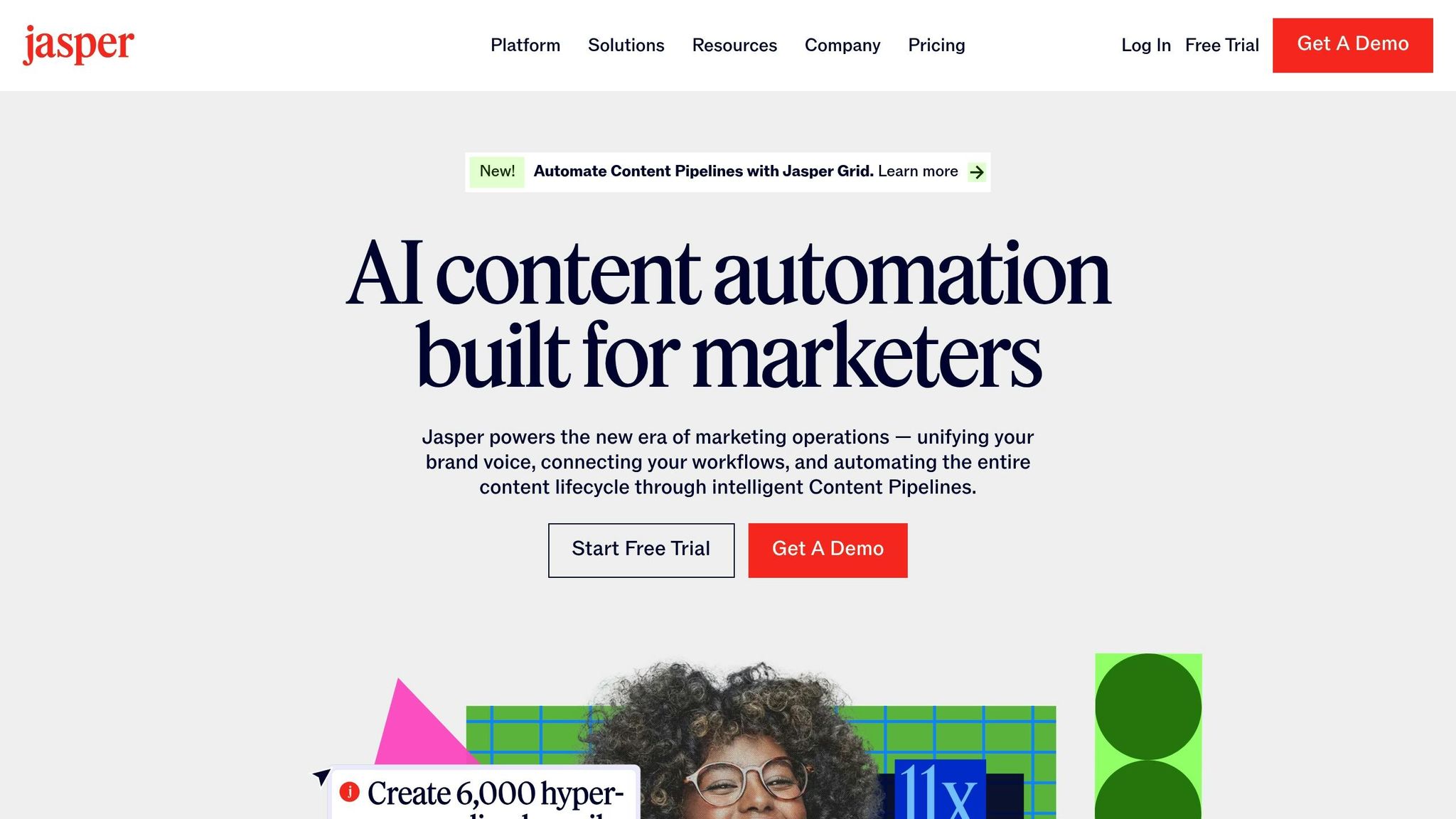
When considering whether AI can replace human writers, tools like Jasper AI and Copy.ai stand out for their technical capabilities. These platforms can produce everything from blog posts to fully-fledged marketing campaigns, leveraging advanced models to create content that’s grammatically correct and well-structured.
Take Copy.ai, for example. It excels at maintaining tone, adhering to brand guidelines, and adapting its style to suit various needs. This makes it a go-to option for generating articles, marketing copy, and social media content that often requires minimal editing. The ability to produce high-quality, straightforward content quickly is a clear advantage.
Speed is another standout feature. Copy.ai positions itself as a comprehensive content solution, boasting the ability to cut production timelines "from weeks to seconds" while streamlining team workflows and eliminating bottlenecks. This acceleration not only enhances productivity but also reduces costs significantly.
The impact on engagement is notable too. Jean English, former Chief Marketing Officer at Juniper Networks, shared in 2024:
"Thanks to Copy.ai, we’re generating 5x more meetings with our personalized, AI-powered GTM strategy."
This demonstrates how AI-generated content can effectively capture attention and drive results. By trimming workflows and offering cost-effective solutions, tools like Copy.ai make global strategies, including translation and localization, more accessible – at a fraction of the cost charged by traditional agencies.
Scalability is another strength. Whether producing 10 pieces of content or 10,000, AI tools like Copy.ai maintain consistent quality. They also offer advanced features like real-time translation, Account-Based Marketing campaigns, and deal coaching – tasks that would otherwise require significant manual effort.
AI tools work best when seamlessly integrated into existing workflows. Copy.ai exemplifies this by connecting teams and unifying data, evolving into a comprehensive business solution that automates marketing processes and codifies best practices. The performance metrics show that AI-generated content is no longer experimental but a reliable tool across a range of industries and applications.
2. Human Content Writers
AI tools might win in speed and consistency, but when it comes to depth and connection, human content creators shine. They bring a blend of creativity, emotional intelligence, and the ability to adapt contextually – qualities that AI struggles to replicate. While AI can churn out content in seconds, human writers craft stories that truly resonate, picking up on subtleties in briefs and tailoring tone to suit different audiences.
One of the standout strengths of human writers is their ability to deliver quality and engagement. They can pick up on unspoken cues, understand cultural nuances, and inject personality into their work, creating content that feels relatable and authentic. Their storytelling skills are key to building emotional connections, which in turn foster trust and long-term engagement.
Human writers also rely on thorough research, brainstorming, and revisions to bring new ideas to life. They’re quick to adapt to trends and aren’t afraid to pivot when a better approach emerges.
That said, production speed is a clear challenge. Where AI can produce drafts in seconds, human workflows often take days or even weeks, especially for large-scale projects. Roman Olney highlights how traditional agency processes can slow things down and increase costs, particularly when coordinating multiple writers. These hurdles, however, only emphasize the unique value human writers provide.
Despite these operational challenges, human writers excel in areas where cultural understanding, nuanced problem-solving, and an authentic voice are essential. Tasks like conducting interviews and synthesizing diverse perspectives into meaningful thought leadership are where their expertise truly stands out.
sbb-itb-8421839
Pros and Cons
When comparing AI tools and human writers, their respective strengths and limitations become clear, especially when backed by real-world data. For instance, leading companies have highlighted AI’s ability to deliver content quickly and cost-effectively. These advantages have had a noticeable effect on engagement metrics.
AI tools are known for their speed and efficiency. They can produce drafts in mere seconds, a sharp contrast to the days or weeks often required by human writers. This capability allows businesses to generate large volumes of content that remain relevant and consistent.
On the other hand, human writers shine in areas where strategy and creativity are paramount. Their ability to conduct interviews, integrate diverse viewpoints, and navigate subtleties ensures the creation of stories that deeply resonate with audiences.
From a financial perspective, AI tools are more budget-friendly, operating at a fraction of the cost associated with human writers. However, the higher cost of employing human writers often yields returns in areas requiring nuanced decision-making and authentic engagement.
Here’s a quick comparison of key differences between AI tools and human writers:
| Aspect | AI Tools | Human Writers |
|---|---|---|
| Speed | Produces drafts in seconds | Takes days or weeks for thorough content creation |
| Scale & Volume | Handles large-scale content efficiently | Limited by individual capacity and time |
| Cost Efficiency | Low operational costs; e.g., Lenovo saved $16M | Higher expenses (salaries, benefits, agency fees) |
| Consistency | Ensures a uniform brand voice | Style and tone may vary between writers |
| Strategic Planning | Executes predefined strategies | Crafts comprehensive strategies and guides AI usage |
| Emotional Intelligence | Limited cultural understanding | Builds genuine emotional connections |
| Adaptability | Works within programmed parameters | Adapts creatively to subtle cues and context |
Conclusion
AI may never fully replace human content writers, but it’s clear that both have their own strengths, making them more allies than adversaries in content creation.
AI tools shine in areas like cost efficiency and speed, delivering impressive results such as reduced expenses and improved engagement metrics. For businesses looking to produce large amounts of content quickly or customize outreach on a massive scale, AI offers capabilities that are tough for human writers to match in terms of turnaround time and budget.
That said, human writers bring irreplaceable qualities to the table. Tasks requiring emotional depth, creative strategy, or cultural awareness still depend heavily on human expertise. From conducting meaningful interviews to crafting stories that resonate on a personal level, these are areas where AI continues to fall short.
The future of content creation lies in a hybrid approach. Forward-thinking businesses are already blending AI’s ability to handle data-heavy, repetitive tasks with the human touch needed for strategic planning and emotionally engaging content. Together, these strengths can elevate content strategies to new heights.
Ashley Levesque, VP of Marketing at Banzai, summed it up perfectly:
"I didn’t even know AI workflows were something that I was lacking until someone said, ‘Did you know you could do all of this with Copy.ai?’"
The most effective content strategies leverage AI for efficiency and scale while relying on human creativity and insight to craft content that truly connects with audiences. This collaboration is where the magic happens.
FAQs
How do AI tools like Jasper AI ensure consistent brand voice across large-scale content?
AI tools, such as Jasper AI, rely on advanced algorithms and machine learning to align with a brand’s tone, style, and guidelines. By analyzing specific content examples, they can mimic the desired voice, ensuring a consistent feel across various pieces of writing.
These tools are particularly effective at maintaining uniformity by adhering to set rules and using natural language processing to grasp context. However, while they’re great for scaling content production efficiently, human input remains crucial. Fine-tuning emotional subtleties and ensuring the content fully reflects the brand’s identity often requires a personal touch.
When should a business prioritize human writers over AI tools for creating content?
Businesses often lean toward human writers in situations where creativity, emotional depth, or a deep understanding of a specific audience is key. Think about crafting a brand story that resonates on a personal level or producing content that navigates sensitive topics with care – these tasks thrive on the unique perspective and nuanced judgment that only human writers can bring.
Human writers also shine when it comes to creating content that feels personal and genuine. Whether it’s an opinion piece, a thought leadership article, or something meant to forge an emotional bond with readers, their ability to pick up on subtle cultural cues and deliver content that feels authentic makes them irreplaceable in these scenarios.
What challenges does AI face when creating emotionally engaging or culturally sensitive content?
AI tools are undeniably powerful, but they often fall short when it comes to capturing the emotional depth or subtle cultural nuances that make content truly connect with people. Without the ability to fully grasp human experiences or emotional contexts, the content they produce can sometimes feel detached or fail to resonate with specific audiences.
This is where human writers shine. They bring personal experiences, empathy, and an innate understanding of cultural intricacies to the table. For topics that demand a deep emotional connection or a sensitive approach, human insight is irreplaceable in crafting content that feels genuine, relatable, and meaningful.